Kidney Stone Treatment in Siliguri
Urological Care & Kidney Stone Treatment
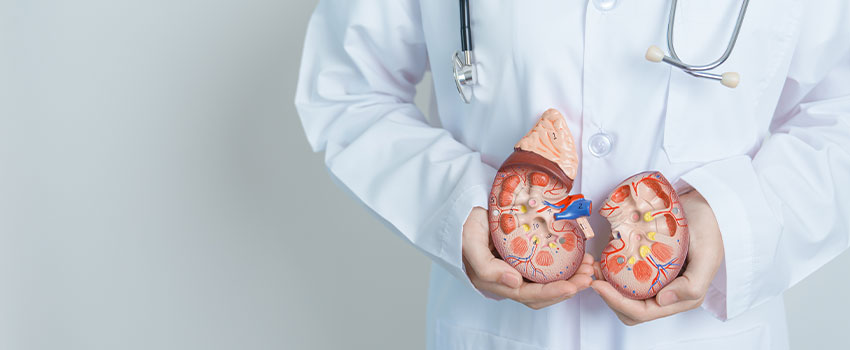
Renal calculi (kidney stones) are hard mineral and salt deposits that form within the kidneys when urinary concentrations become elevated. While small calculi may pass spontaneously, larger stones can cause localized discomfort and urinary obstruction. At Maxwell Hospital & Research Centre, we provide clinical evaluation and management for kidney stones utilizing established diagnostic and therapeutic infrastructure.
Registration No. 80374 - West Bengal Medical Council (Active)
Dr. Vishal Golay (MBBS, MD in Internal Medicine and DM in Nephrology) is the lead consultant for nephrology at our institution, supporting renal care services in Siliguri.

Clinical areas of focus include:
Registration No. 100126 - West Bengal Medical Council (Active)
Dr. Samarth Agarwal (MBBS, MS, MCh - Gold Medalist) is a urological surgeon providing urology and renal stone management services at our facility, specializing in endoscopic and minimally invasive surgical modalities.

Clinical areas of focus include:
Recognizing the clinical manifestations of renal calculi assists in prompt diagnosis and management. Symptoms typically manifest when calculi migrate within the renal collecting system or obstruct the ureters:

Severe, paroxysmal pain originating in the flank region and radiating inferiorly toward the lower abdomen and groin.

Burning sensations or discomfort experienced during micturition.

Presence of pink, red, or brownish discoloration in the urine resulting from mucosal irritation within the urinary tract.

Increased frequency or persistent sensation of urinary urgency, particularly when calculi are positioned near the vesicoureteral junction.

Gastrointestinal symptoms secondary to shared autonomic visceral nerve pathways between the renal system and the gastrointestinal tract.

Pain radiating to the testicles or labia due to neural pathways shared between the urinary tract and reproductive structures.
Maxwell Hospital & Research Centre emphasizes preventive urological care. Our urology department, led by Dr. Samarth Agarwal, provides guidance on mitigating recurrence risks for renal and urinary conditions.
Recommended preventive measures include:
Maxwell Hospital & Research Centre provides urological care and diagnostic infrastructure to support patient evaluation and minimally invasive surgical management. Key considerations for choosing our urology services include:
Our nephrology and urology consultants, Dr. Vishal Golay and Dr. Samarth Agarwal, provide comprehensive renal stone management utilizing established diagnostic protocols and surgical modalities such as laser lithotripsy, laparoscopy, and endourology.
Our intensive care infrastructure supports round-the-clock emergency medical evaluation and stabilization for acute presentations, including severe renal colic.
We utilize Holmium laser technology to facilitate endoscopic stone fragmentation and dusting.
We provide post-treatment dietary and lifestyle guidance designed to assist in mitigating the recurrence of renal calculi.
Advanced endourological procedures such as Retrograde Intrarenal Surgery (RIRS) and Percutaneous Nephrolithotomy (PCNL) are utilized for managing complex or large renal calculi through minimally invasive visualization and surgical techniques.

Copyrights © 2026, Maxwell Hospital & Research Centre.